

How to Draw a Dolphin
Dolphins are a favorite subject for beach and ocean art. Learn how to draw a playful leaping dolphin step-by-step, starting with one long, sweeping curve and building up the fins, tail, and friendly face.
7 Steps
Read
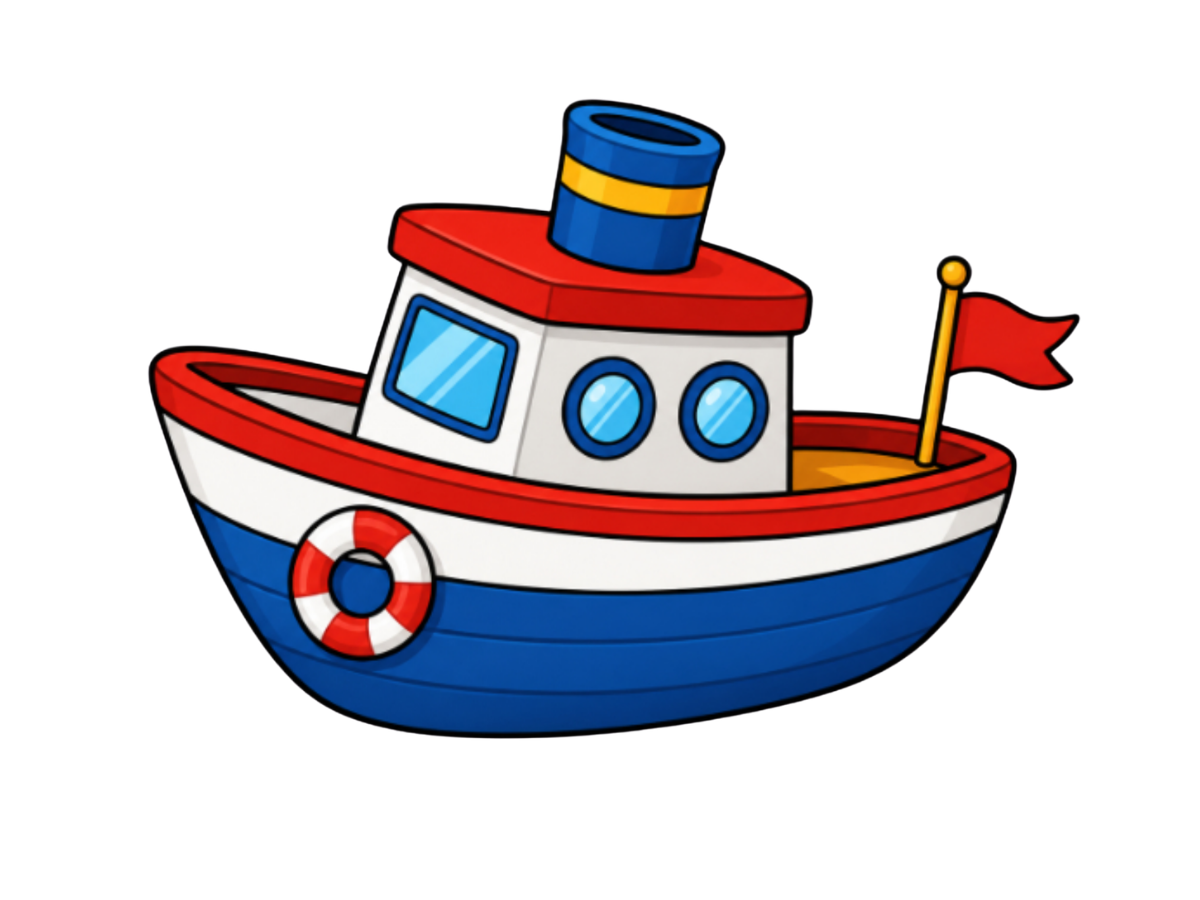
There's something instantly comforting about a small cartoon boat — that round, bobbing hull, the boxy little cabin perched on top, and a tiny flag fluttering off the back like it's just been out on the water all morning. It's one of those drawings that looks like it belongs on a nursery wall or the cover of a kid's storybook, and the best part is that it comes together from nothing more complicated than a curved bowl shape, a box, and a handful of circles. You don't need to be confident with a pencil to get a boat that actually looks like a boat by the time you're done — you just need to take it one shape at a time.

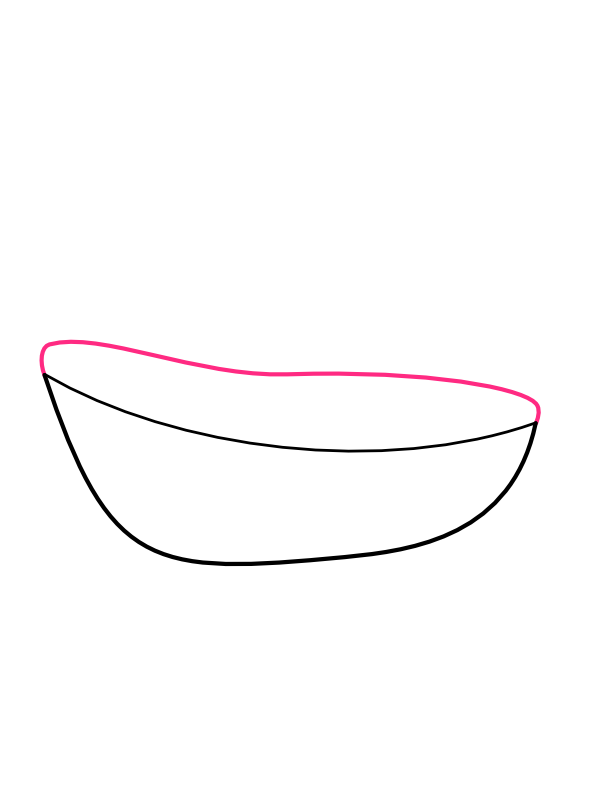
Start low on your page and draw one long, sweeping curve — it should dip down in the middle and lift back up at both ends, kind of like a smile stretched wide and flattened, or the bottom of a bowl. This single curved line is the underside of the hull, and it's the foundation the entire boat rests on, so don't rush it. Let the left end taper up gently and the right end lift a touch higher and sharper, since that's the bow of the boat cutting through the water. There's nothing else on the page yet, and that's exactly how it should look at this stage — just one confident, unbroken sweep.
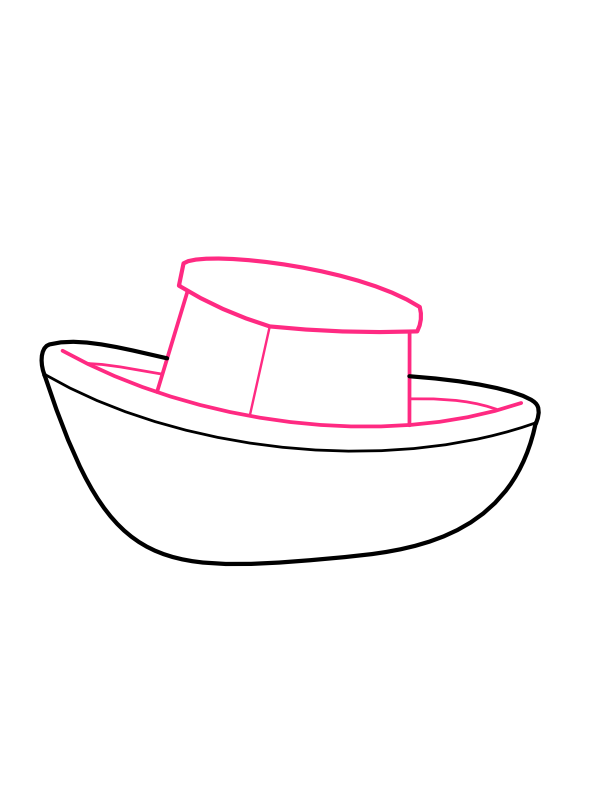
Above the hull curve you just drew, add a second curved line running roughly parallel to it, a little looser and wavier this time, connecting to the two tips of the hull below. This is the top edge of the boat — the deck rim — and giving it a slightly uneven, relaxed wobble instead of a perfectly smooth arc is what makes it feel hand-built rather than machine-stamped. Inside the hull, sketch one more thin curved line just beneath the deck rim to suggest the inner wall of the boat, the little lip you'd see looking down into any real rowboat or dinghy. Three curves, and already it reads unmistakably as a boat.
Roughly in the center of the deck, draw a small box shape standing upright — this will become the wheelhouse. Give the top of the box a gentle curve or slight peak rather than a flat line, so it looks like a little roof rather than a shoebox, and add a short vertical line down the front face to hint that the box has depth and isn't just a flat rectangle glued onto the boat. Keep this cabin modest in size compared to the hull beneath it; a cabin that's too large will make the whole boat feel top-heavy and off balance.
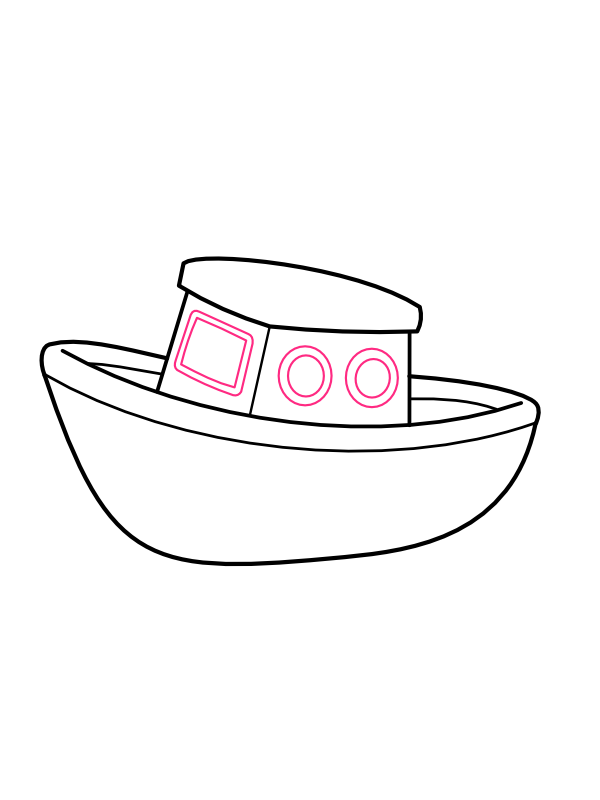
On the front face of the cabin, draw a small square window, and give it a slightly rounded or double-outlined edge so it doesn't look like a plain cut-out square — a thin border running just inside the window shape does the trick nicely. To the right of the window, add two small circles side by side, each with a slightly smaller circle inside it — these are the portholes, and that inner ring is what makes them read as glass and metal rather than flat dots. This one step is where the boat really starts to feel like a vehicle instead of just a shape sitting on the water.
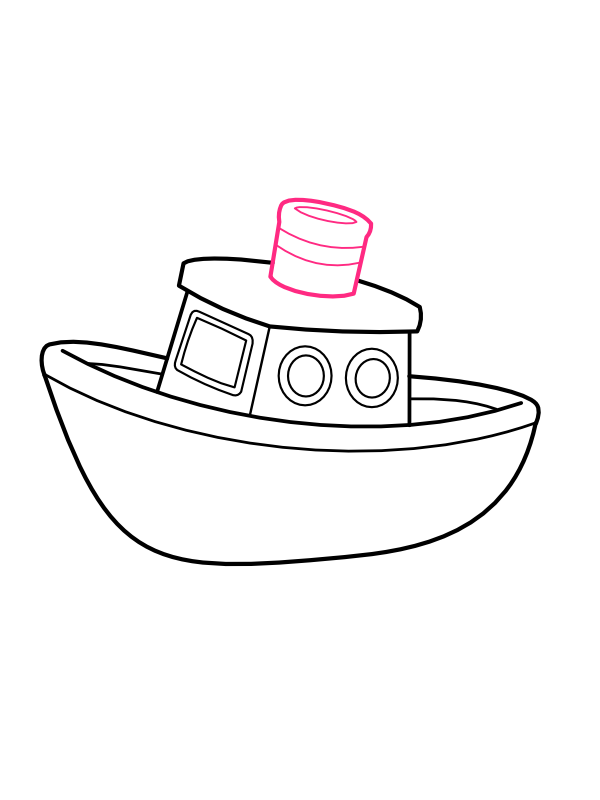
Rising up from the top of the cabin, draw a short cylindrical shape — a smokestack, wider at the base and tapering only slightly as it rises, with an oval opening at the very top to show the hollow inside. Add one or two curved lines wrapping around the middle of the cylinder, echoing the curve of the top opening, to suggest a raised band or trim ring circling the funnel. This little chimney is a surprisingly small shape to draw, but it's doing a lot of work — it's the piece that pushes the drawing from 'boxy little cabin' into 'actual tugboat.'
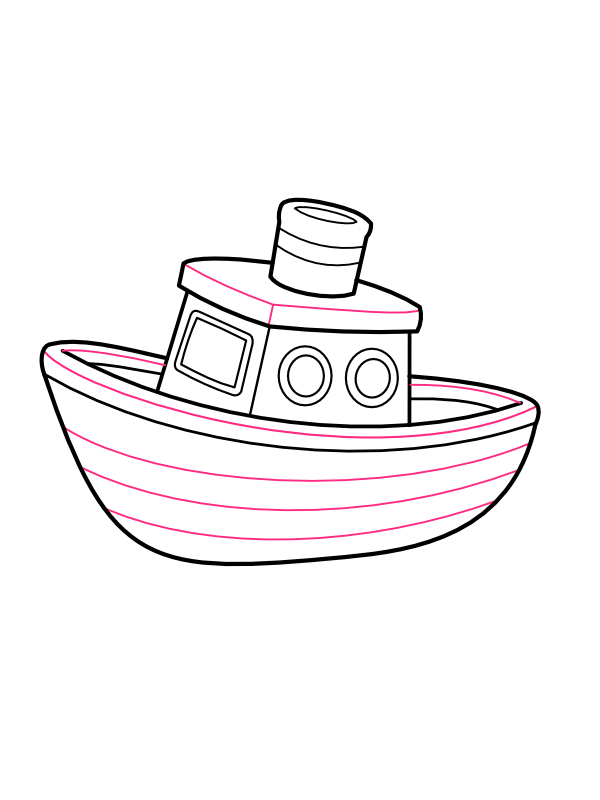
Along the body of the hull, beneath the deck rim, draw a series of gently curved horizontal lines running from the bow to the stern, following the same curve as the hull itself. These represent the wooden planks or hull plating that real boats are built from, and they're one of those details that costs very little effort but adds a huge amount of texture — without them, the hull is just an empty curved shape, and with them, it suddenly has structure and history. Space the lines fairly evenly, but don't worry about making them perfectly identical; a touch of unevenness actually helps the hull feel like it's made of individual boards rather than printed on.
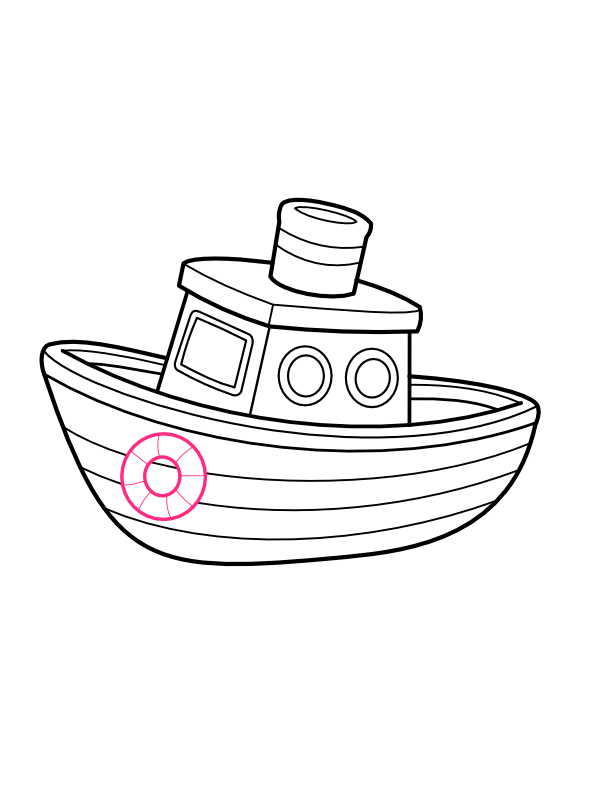
On the side of the hull, draw a ring shape — a circle with a smaller circle inside it, leaving a donut-shaped band between the two. This is the life preserver every proper little boat carries, usually mounted somewhere along the rail where it can be grabbed quickly. Once color comes in later, a few painted segments around the ring will make it instantly recognizable, but even in outline form, the simple ring-within-a-ring shape already reads clearly as a life buoy rather than a random circle.
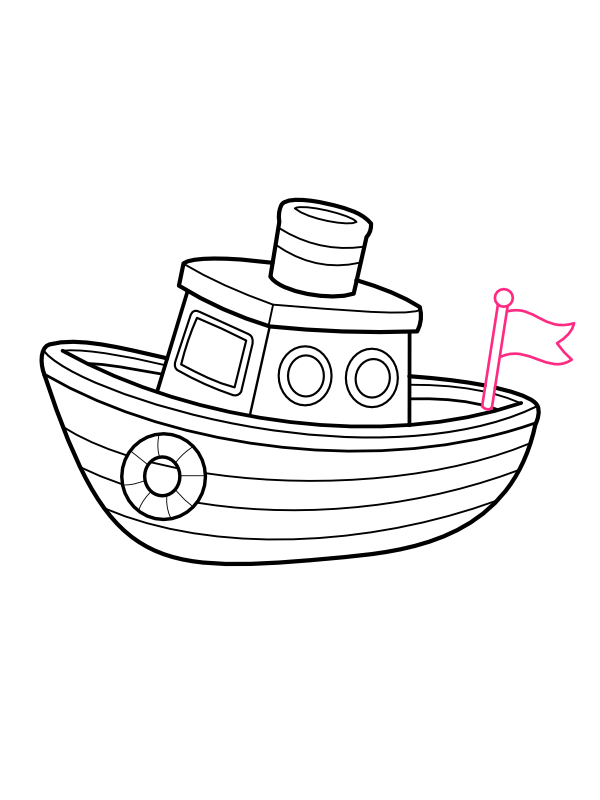
Near the back of the boat, behind the cabin, draw a thin straight vertical pole rising up from the deck, topped with a small circle at the very tip like a finial. From partway down the pole, draw a small flag shape flowing outward and back — a triangular banner with a notched, slightly wavy trailing edge, as if a light breeze is catching it. The flag is a tiny detail in terms of size, but it adds a real sense of motion and life to a drawing that's otherwise made entirely of still, static shapes — suddenly there's a hint of wind and open water.
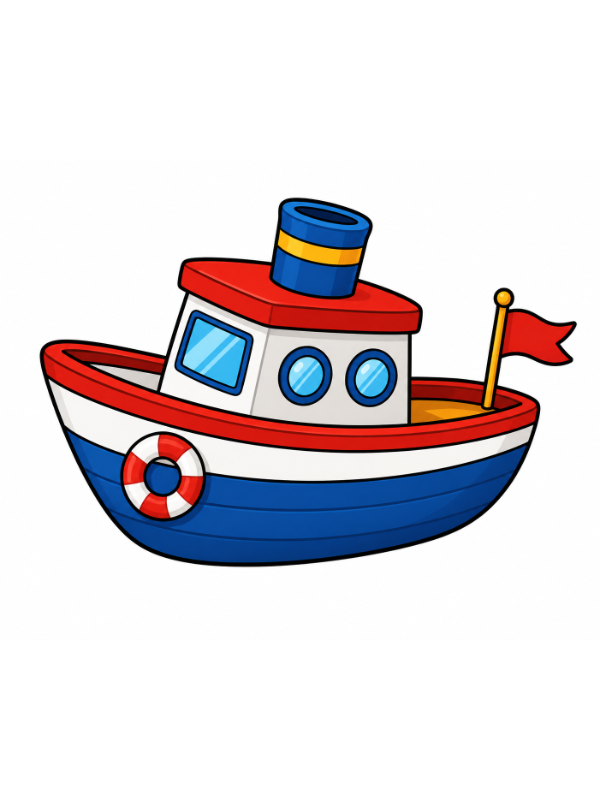
Now for the most satisfying part!
Once the color is in, that red-white-and-blue hull with the golden funnel trim gives the whole boat a cheerful, storybook charm — it looks like it's ready to putter off across a calm harbor at any moment. 🚤
The step most people slow down on is Step 1 — that single opening hull curve. It doesn't look like much on its own, and it's tempting to rush past it to get to the 'fun' parts like the cabin and the funnel, but every other shape in this drawing sits directly on top of it, so a little extra care here pays off for the rest of the drawing. The good news is that everything after that hull line is far more forgiving — a slightly crooked funnel or an uneven porthole barely registers once the whole boat is colored in, because the eye reads the overall shape of the thing long before it notices small imperfections in any one part.
Once this version feels comfortable, it's worth trying the boat at a slight angle rather than dead-on from the side, so the deck becomes visible as a thin curved strip and the cabin sits a little off-center — it's a small change that makes the whole scene feel less like a flat cutout and more like a boat actually floating on water.
Dolphins are a favorite subject for beach and ocean art. Learn how to draw a playful leaping dolphin step-by-step, starting with one long, sweeping curve and building up the fins, tail, and friendly face.

Few things look as instantly cheerful on paper as a donut dripping with icing and scattered with colorful sprinkles. It's one of those drawings that feels like a treat in itself — round, glossy, a little messy in the best way.

Ears have a bit of a reputation for being one of the trickier facial features to draw. Learn how to draw a realistic ear with this easy, step-by-step tutorial!
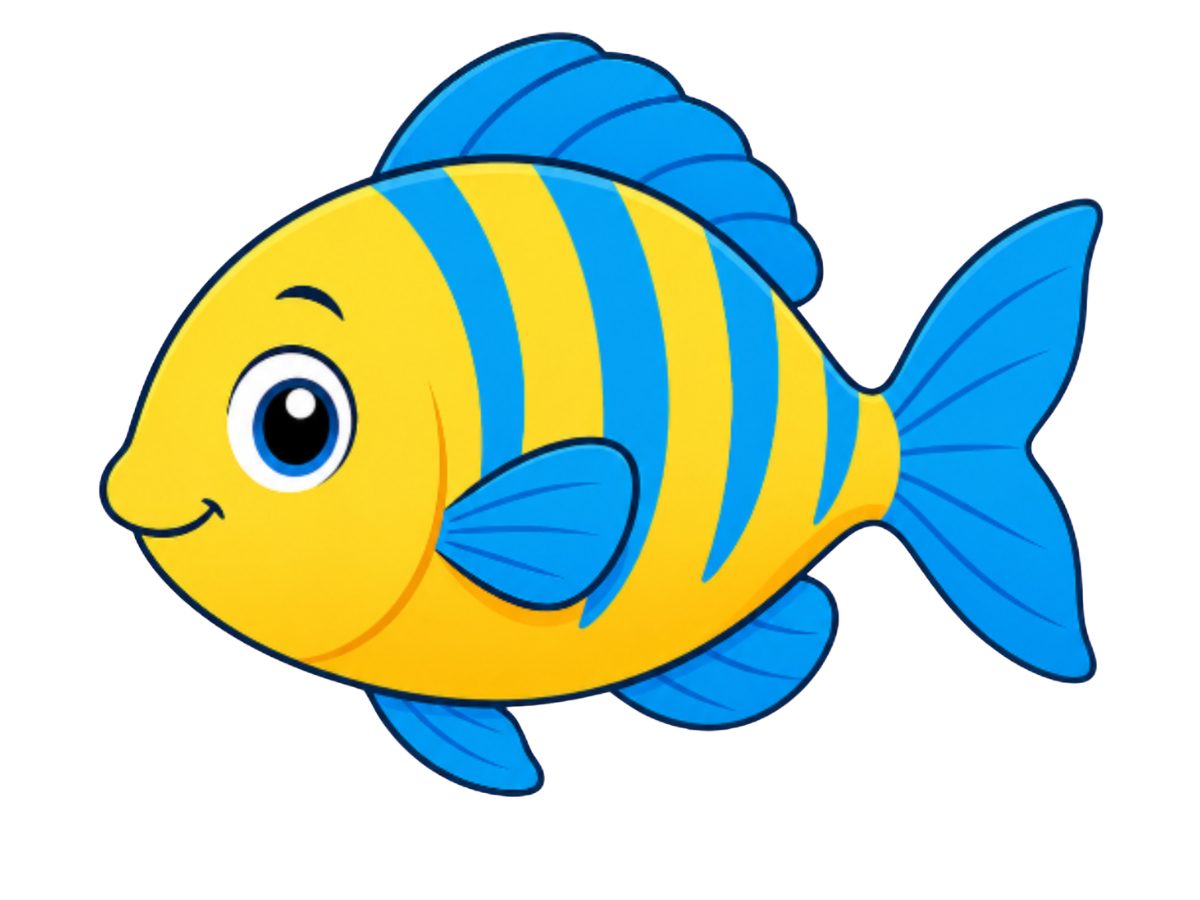
A fish is one of those drawings that feels like it belongs to the ocean the moment you start it. That plump, lemon-shaped body, the big round eye, and the fanned-out fins all come together to make one of the friendliest little sea creatures you can put on paper.